Staff directory
Image
Name
Job Title
Department and Division
Specialisms

Identification and Advisory Officer
Department:Life Sciences
Division:Angela Marmont Centre
Division:Angela Marmont Centre

Senior Researcher
Department:Life Sciences
Division:Algae, Fungi and Plants Division
Division:Algae, Fungi and Plants Division
Specialisms:
Plant taxonomy and biogeography, biodiversity modelling and monitoring, conservation assessments and prioritisation

Research Assistant
Department:Core Research Laboratories
Division:Molecular Biology Laboratories
Division:Molecular Biology Laboratories

Head of Registry
Department:Science Directorate
Division:Science Directorate
Division:Science Directorate
Specialisms:
Collections Audit, Collections Documentation, Collections Management, Collections Policy, Due Diligence, Exhibition and …

Head of Conservation
Department:Core Research Laboratories
Division:Conservation Centre
Division:Conservation Centre
Specialisms:
Preventive conservation, business coaching, conservation planning, conservation strategy, remedial conservation


Senior Curator in Charge, Ferns and General
Department:Life Sciences
Division:Algae, Fungi and Plants Division
Division:Algae, Fungi and Plants Division
Specialisms:
Plant taxonomy, Systematics

Merit Researcher
Department:Life Sciences
Division:Invertebrates Division
Division:Invertebrates Division
Specialisms:
Copepod systematics and biology, Crustacean phylogeny, Tantulocarida systematics, Taxonomy of parasitic copepods on fish…

Merit Researcher
Department:Earth Sciences
Division:Vertebrates and Anthropology Palaeobiology
Division:Vertebrates and Anthropology Palaeobiology
Specialisms:
Ancient DNA, Biomolecular Archaeology., Evolutionary Biology, Late Pleistocene, Population Genetics, Taxonomy

Curator, Meteorites
Department:Earth Sciences
Division:Mineral and Planetary Sciences Division
Division:Mineral and Planetary Sciences Division
Image
Required fields:- Image
- Alt text

Science Data Architect
Department:Life Sciences
Division:Diversity and Informatics Division
Division:Diversity and Informatics Division
Specialisms:
Application configuration and support, C#, Data architecture design, Data curation and quality control, Data flow and pr…

Principal Researcher
Department:Life Sciences
Division:Algae, Fungi and Plants Division
Division:Algae, Fungi and Plants Division
Specialisms:
Antarctic and Arctic cyanobacteria, climatic change, freshwater ecosystems, microbial mats, soil microbiology, toxic and…
Image
Required fields:- Image
- Alt text
Sequencing Assistant
Department:Core Research Laboratories
Division:Molecular Biology Laboratories
Division:Molecular Biology Laboratories

Senior Curator in Charge, Diptera + Siphonaptera
Department:Life Sciences
Division:Insects Division
Division:Insects Division

Research Fellow, NERC
Department:Earth Sciences
Division:Invertebrates and Plants Palaeobiology
Division:Invertebrates and Plants Palaeobiology
Specialisms:
Cambrian ecdysozoans: priapulids, Phylogeny & Taphonomy, lobopodians and arthropods
Neuropalaeontology: fossilised brain…

X Ray Lab Manager
Department:Core Research Laboratories
Division:Imaging and Analysis Centre
Division:Imaging and Analysis Centre

UK Biodiversity Training Manager
Department:Life Sciences
Division:Angela Marmont Centre
Division:Angela Marmont Centre
Specialisms:
UK bat species & surveys, UK biodiversity, UK protected species

Research Assistant, DIF
Department:Earth Sciences
Division:Mineral and Planetary Sciences Division
Division:Mineral and Planetary Sciences Division
Specialisms:
Hazard Communication, Igneous Petrology & Geochemistry, Isotope Geochemistry, Mineralogy, Petrography, Volcanology

Principal CIC, Minerals and Planetary Sciences
Department:Earth Sciences
Division:Mineral and Planetary Sciences Division
Division:Mineral and Planetary Sciences Division
Specialisms:
Collection Building, Curation, Geochemistry, Mineral characterisation, New Minerals, Novel Materials, Powder diffraction…

Postdoctoral Researcher, Leverhulme
Department:Life Sciences
Division:Invertebrates Division
Division:Invertebrates Division
Specialisms:
Bryozoa, Invertebrate palaeontology, fossil folklore

Senior Researcher
Department:Earth Sciences
Division:Mineral and Planetary Sciences Division
Division:Mineral and Planetary Sciences Division
Specialisms:
Clay mineralogy and geochemistry.
Image
Required fields:- Image
- Alt text

Head of Collections
Department:Earth Sciences
Division:Collections
Division:Collections
Specialisms:
Geochemistry, Media, Meteorites, Microscopy, Mineralogy, Public outreach

Scientific Associate - Invertebrates
Department:Life Sciences
Division:Invertebrates Division
Division:Invertebrates Division
Specialisms:
Cnidaria, Distributions, Hydrozoa, Siphonophora, Systematics, Taxonomy

Head of Science Policy and Communication
Department:Science Directorate
Division:Science Directorate
Division:Science Directorate

Scientific Associate
Department:Life Sciences
Division:Diversity and Informatics Division
Division:Diversity and Informatics Division
Specialisms:
Teaching, Algae, Algal biogeography, Algal conservation, Algal taxonomy, Freshwater algae, Freshwater green algae, Mari…

Postdoctoral Researcher,Seabed Resources
Department:Life Sciences
Division:Invertebrates Division
Division:Invertebrates Division

Marie Curie Fellow, FLIGHTLOSS
Department:Life Sciences
Division:Vertebrates Division
Division:Vertebrates Division

Senior Conservator
Department:Core Research Laboratories
Division:Conservation Centre
Division:Conservation Centre
Specialisms:
Conservation of Earth Science Collections

Researcher, Head of Division
Department:Life Sciences
Division:Invertebrates Division
Division:Invertebrates Division
Specialisms:
biogeography, evolution of shell colour, marine molluscs, speciation

Postdoctoral Researcher, Nauru Ocean Resources
Department:Life Sciences
Division:Invertebrates Division
Division:Invertebrates Division

Editorial Assistant
Department:Earth Sciences
Division:Vertebrates and Anthropology Palaeobiology
Division:Vertebrates and Anthropology Palaeobiology

Curator, Hymenoptera
Department:Life Sciences
Division:Insects Division
Division:Insects Division
Specialisms:
Chalcidoidea; Evanioidea, Megalyroidea, Stephanoidea and Trigonalyoidea collections; curation; microhymenoptera collecti…

Curator, Anthropology
Department:Earth Sciences
Division:Vertebrates and Anthropology Palaeobiology
Division:Vertebrates and Anthropology Palaeobiology
Specialisms:
Osteology, anthropology, archaeology, bioarchaeology, palaeopathology


Senior Researcher
Department:Life Sciences
Division:Invertebrates Division
Division:Invertebrates Division
Specialisms:
Bryozoa, Phylogenetics, Platyhelminthes, bird strike identification, invasive species, mitogenomics, molecular systemati…

Curator, Minerals
Department:Earth Sciences
Division:Mineral and Planetary Sciences Division
Division:Mineral and Planetary Sciences Division
Specialisms:
Curation and Collection Management, Gemmology, Mineralogy

Scientific Associate - Parasites and Vectors
Department:Life Sciences
Division:Parasites and Vectors Division
Division:Parasites and Vectors Division
Specialisms:
Systematics, phylogeny and biology of parasitic worms, with emphasis on Platyhelminthes


Researcher
Department:Life Sciences
Division:Invertebrates Division
Division:Invertebrates Division
Specialisms:
Development and Genomics of Parasitic Flatworms, Evolution

Scientific Associate
Department:Life Sciences
Division:Algae, Fungi and Plants Division
Division:Algae, Fungi and Plants Division


Principal Researcher
Department:Earth Sciences
Division:Invertebrates and Plants Palaeobiology
Division:Invertebrates and Plants Palaeobiology
Specialisms:
Fossil Plants, Palaeobotany, Plant Evolution
Image
Required fields:- Image
- Alt text
Molecular Biology Laboratory Manager
Department:Core Research Laboratories
Division:Molecular Biology Laboratories
Division:Molecular Biology Laboratories

Senior Curator in Charge, Lepidoptera
Department:Life Sciences
Division:Insects Division
Division:Insects Division
Specialisms:
Lepidoptera; British & Irish Lepidoptera collections, collectors and localities; Collections Management; Curation; Digit…

Postdoctoral Researcher, DIF
Department:Earth Sciences
Division:Mineral and Planetary Sciences Division
Division:Mineral and Planetary Sciences Division

LS Polychaete PhD Student
Department:Life Sciences
Division:Aquatic Invertebrates Division
Division:Aquatic Invertebrates Division

Identification and Advisory Officer
Department:Life Sciences
Division:Angela Marmont Centre
Division:Angela Marmont Centre
Image
Required fields:- Image
- Alt text
Senior Department Coordinator
Department:Earth Sciences
Division:Department Management Team
Division:Department Management Team
Specialisms:
Adobe Creative Suite, Event Co-ordination, Space Management

Merit Researcher
Department:Earth Sciences
Division:Vertebrates and Anthropology Palaeobiology
Division:Vertebrates and Anthropology Palaeobiology
Specialisms:
Dinosaurs, macroevolution, systematics, taxonomy

Research Assistant Calleva Rift Valley
Department:Earth Sciences
Division:Vertebrates and Anthropology Palaeobiology
Division:Vertebrates and Anthropology Palaeobiology
Specialisms:
Pollen of Pleistocene native floras of the British Isles

Researcher and Culture Facility Manager
Department:Life Sciences
Division:Invertebrates Division
Division:Invertebrates Division
Image
Required fields:- Image
- Alt text
Sequencing Assistant
Department:Core Research Laboratories
Division:Molecular Biology Laboratories
Division:Molecular Biology Laboratories

Analytical Chemist: FTIR Specialist
Department:Core Research Laboratories
Division:Imaging and Analysis Centre
Division:Imaging and Analysis Centre


Image
Required fields:- Image
- Alt text
Department Coordinator, Labs and Technical
Department:Life Sciences
Division:Invertebrates Division
Division:Invertebrates Division

Research Assistant, Biodiversity Indicator Portal
Department:Life Sciences
Division:Algae, Fungi and Plants Division
Division:Algae, Fungi and Plants Division

Collections Leader
Department:Life Sciences
Division:Department Operations Team
Division:Department Operations Team
Specialisms:
Collections Management and Care; Collections Standards; Collections Policies and Procedures; Risk Management for Collect…

Principal Curator in Charge, Vertebrates
Department:Life Sciences
Division:Vertebrates Division
Division:Vertebrates Division

Head of Division, Imaging and Analysis
Department:Core Research Laboratories
Division:Imaging and Analysis Centre
Division:Imaging and Analysis Centre
Specialisms:
Computed Tomography, Confocal Microscopy, Electron Microscopy, Light microscopy, Micro-CT, Scanning Electron Microscopy,…

Researcher Mineral Sciences and Systematics
Department:Earth Sciences
Division:Mineral and Planetary Sciences Division
Division:Mineral and Planetary Sciences Division

Digital Special Collections Librarian
Department:Library and Archives
Division:LA Special Collections
Division:LA Special Collections

Curator, Non-Mammalian Tetrapods
Department:Earth Sciences
Division:Vertebrates and Anthropology Palaeobiology
Division:Vertebrates and Anthropology Palaeobiology

Senior Curator in Charge, Gen. Herbarium 3 and 4
Department:Life Sciences
Division:Algae, Fungi and Plants Division
Division:Algae, Fungi and Plants Division
Specialisms:
collections survey, taxonomy and systematics, Collections management (knowledge and experience across botanical collec…


Metadata Lead
Department:Library and Archives
Division:LA Researcher Services and Digital Delivery
Division:LA Researcher Services and Digital Delivery

Green Economy Fellow
Department:Earth Sciences
Division:Mineral and Planetary Sciences Division
Division:Mineral and Planetary Sciences Division

Principal Curator, Micropalaeontology and SCIC IP
Department:Earth Sciences
Division:Invertebrates and Plants Palaeobiology
Division:Invertebrates and Plants Palaeobiology
Specialisms:
Collections Management, Micropalaeontology, Palaeozoic Ostracods, Palaeozoic stratigraphy., conodonts

Developer, Open Data and Innovation
Department:Life Sciences
Division:Diversity and Informatics Division
Division:Diversity and Informatics Division
Specialisms:
biodiversity, data analysis, data visualisation, digitisation, food webs, informatics, scientific software


Senior Curator, Mammals
Department:Life Sciences
Division:Vertebrates Division
Division:Vertebrates Division
Specialisms:
Interests include wildlife conservation & forensics, carnivores & pangolins, field biology, historical collections & exp…

Principal Curator in Charge, Algae, Fungi
Department:Life Sciences
Division:Algae, Fungi and Plants Division
Division:Algae, Fungi and Plants Division
Specialisms:
Acanthaceae, Botanical collections, Island biogeography, Macaronesia, plant systematics


Senior curator, micropalaeontology
Department:Earth Sciences
Division:Invertebrates and Plants Palaeobiology
Division:Invertebrates and Plants Palaeobiology
Specialisms:
Biostratigraphy, Collections research projects, Micropalaeontology, Palynology with special focus on the Mesozoic and st…

Senior Curator, Lepidoptera
Department:Life Sciences
Division:Insects Division
Division:Insects Division
Specialisms:
Taxonomy of World Noctuoidea (Lepidoptera). Morphology, and zoogeography of Lepidoptera. Clines, cladistics and biogeogr…

Senior Curator, Lichens and Slime Moulds
Department:Life Sciences
Division:Algae, Fungi and Plants Division
Division:Algae, Fungi and Plants Division

Image
Required fields:- Image
- Alt text
Curator, Pleistocene Mammals
Department:Earth Sciences
Division:Vertebrates and Anthropology Palaeobiology
Division:Vertebrates and Anthropology Palaeobiology

Researcher Co-Investigator, WISER
Department:Life Sciences
Division:Parasites and Vectors Division
Division:Parasites and Vectors Division

Calleva Research Leader, Human Evolution
Department:Earth Sciences
Division:Vertebrates and Anthropology Palaeobiology
Division:Vertebrates and Anthropology Palaeobiology

Principal Curator in Charge, Invertebrates
Department:Life Sciences
Division:Invertebrates Division
Division:Invertebrates Division
Specialisms:
Amphipoda, Indo-Pacific Biogeography, Invasive Species, Peracarida, Taxonomy

Senior Curator in Charge, Amphibians and Reptiles
Department:Life Sciences
Division:Vertebrates Division
Division:Vertebrates Division
Specialisms:
Biogeography, Genomics, Herpetology, Molecular Evolution, Phylogenetics, Systematics

Curator, Coleoptera
Department:Life Sciences
Division:Insects Division
Division:Insects Division
Specialisms:
Cantharidae, Chrysomelidae, Coleoptera, Indochina, Lampyridae, Melyridae, Phengodidae, Prionoceridae, biogeography, coll…

Leader Mining Consultancy/Business Manager
Department:Earth Sciences
Division:Economic and Environmental Earth Sciences
Division:Economic and Environmental Earth Sciences
Specialisms:
GIS, Geochemistry, geological mapping and sampling, mineral deposits, mineralogy
Image
Required fields:- Image
- Alt text

Research Leader and Head of CERCAMS
Department:Earth Sciences
Division:Mineral and Planetary Sciences Division
Division:Mineral and Planetary Sciences Division

Merit Researcher
Department:Earth Sciences
Division:Invertebrates and Plants Palaeobiology
Division:Invertebrates and Plants Palaeobiology
Specialisms:
Arthropod phylogeny, Chilopoda (centipedes), Palaeozoic arthropods

Principal Curator in Charge, Insects
Department:Life Sciences
Division:Insects Division
Division:Insects Division
Specialisms:
Braconidae, Ichneumonidae, curation, taxonomy

Curator, Human Remains
Department:Earth Sciences
Division:Vertebrates and Anthropology Palaeobiology
Division:Vertebrates and Anthropology Palaeobiology
Specialisms:
Archaeology, Archival Research, Human Osteology, Repatriation

Head of Life Sciences Department
Department:Life Sciences
Division:Department Operations Team
Division:Department Operations Team

Principal Researcher
Department:Life Sciences
Division:Algae, Fungi and Plants Division
Division:Algae, Fungi and Plants Division
Specialisms:
Cladistics, Diatom biogeography, Diatom systematics, Diatom taxonomy, Phytotaxa

Postdoctoral Researcher, QPX
Department:Earth Sciences
Division:Economic and Environmental Earth Sciences
Division:Economic and Environmental Earth Sciences

Postdoctoral Researcher, BHP Zircon Project
Department:Earth Sciences
Division:Mineral and Planetary Sciences Division
Division:Mineral and Planetary Sciences Division


Senior Curator in Charge, Coleoptera
Department:Life Sciences
Division:Insects Division
Division:Insects Division
Specialisms:
British Coleoptera, Coleoptera, Collections Management, Curculionoidea, Historic Type material, History of Collecting, H…

Principal Researcher
Department:Life Sciences
Division:Insects Division
Division:Insects Division
Specialisms:
biodiversity, biogeography, bumblebees, conservation, ecology, phylogeny, species declines, taxonomy

Senior Curator in Charge, Diptera + Siphonaptera
Department:Life Sciences
Division:Insects Division
Division:Insects Division

Research Leader, Mineral Deposits
Department:Earth Sciences
Division:Mineral and Planetary Sciences Division
Division:Mineral and Planetary Sciences Division
Specialisms:
cathodoluminescence, fluid inclusions, fluids, geochemistry, hydrothermal geochemistry, isotope geochemistry, laser abla…

Research Assistant, NERC Landscapes
Department:Life Sciences
Division:Algae, Fungi and Plants Division
Division:Algae, Fungi and Plants Division

Senior Curator, Pteridophytes
Department:Life Sciences
Division:Algae, Fungi and Plants Division
Division:Algae, Fungi and Plants Division
Specialisms:
Ferns; curation; collections management; integrated pest management.

Senior Curator
Department:Earth Sciences
Division:Invertebrates and Plants Palaeobiology
Division:Invertebrates and Plants Palaeobiology
Specialisms:
Cladistics, Informatics

Research Leader
Department:Earth Sciences
Division:Mineral and Planetary Sciences Division
Division:Mineral and Planetary Sciences Division

Conservator
Department:Core Research Laboratories
Division:Conservation Centre
Division:Conservation Centre
Specialisms:
Accredited Conservator, Care and conservation of fluid specimens, Care and conservation of taxidermy, Collections Care, …

LS Polychaete PhD Student
Department:Life Sciences
Division:Invertebrates Division
Division:Invertebrates Division

Senior Researcher
Department:Earth Sciences
Division:Vertebrates and Anthropology Palaeobiology
Division:Vertebrates and Anthropology Palaeobiology

Scientific Associate
Department:Earth Sciences
Division:Invertebrates and Plants Palaeobiology
Division:Invertebrates and Plants Palaeobiology


Senior Curator, Birds
Department:Life Sciences
Division:Vertebrates Division
Division:Vertebrates Division
Specialisms:
- Feather identifications (bird strikes, food contaminations etc.)
- Colour aberrations in birds
- Domestication and gen…


Curator, Microlepidoptera
Department:Life Sciences
Division:Insects Division
Division:Insects Division
Specialisms:
Butterflies, Invasive species, Madagascar, Microlepidoptera, Systematics

Merit Researcher
Department:Earth Sciences
Division:Vertebrates and Anthropology Palaeobiology
Division:Vertebrates and Anthropology Palaeobiology
Specialisms:
Early vertebrate evolution, evolution of dentitions


Curator, General Herbarium
Department:Life Sciences
Division:Algae, Fungi and Plants Division
Division:Algae, Fungi and Plants Division
Image
Required fields:- Image
- Alt text
Professor of Molecular Systematics
Department:Life Sciences
Division:Diversity and Informatics Division
Division:Diversity and Informatics Division

Senior Curator in Charge
Department:Earth Sciences
Division:Invertebrates and Plants Palaeobiology
Division:Invertebrates and Plants Palaeobiology
Specialisms:
Molluscan systematics, bioimmuration, marine macroecology, palaeodiversity, shell morphology and characters, species rad…

Senior Curator in Charge, Mammals
Department:Life Sciences
Division:Vertebrates Division
Division:Vertebrates Division
Specialisms:
Curation, History of Collections, Mammal collections, Marsupials, Monotremes, Taxidermy, Wet Curation
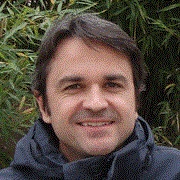
Researcher, Agricultural Entomologist
Department:Life Sciences
Division:Insects Division
Division:Insects Division
Specialisms:
Aleyrodidae, Psylloidea, Sternorrhyncha, biodiversity, classification, collections, databasing, jumping plant lice, macr…

Principal Researcher
Department:Life Sciences
Division:Invertebrates Division
Division:Invertebrates Division
Specialisms:
metazoan phylogenetics, venom evolution, venomics

Senior Curator in Charge, Hymenoptera
Department:Life Sciences
Division:Insects Division
Division:Insects Division
Specialisms:
Collections Care and Conservation, Collections management, Curation, IPM, Integrated Pest Management

Collections Task Force Manager
Department:Earth Sciences
Division:Collections
Division:Collections
Specialisms:
Collections digitisation including documentation, imaging, project management and training; collections management; Pala…

Marie Curie Fellow-CENSZ
Department:Earth Sciences
Division:Mineral and Planetary Sciences Division
Division:Mineral and Planetary Sciences Division
Specialisms:
Zn-Pb nonsulphide deposits, bauxites, supergene alteration

Head of Earth Sciences Department
Department:Earth Sciences
Division:Department Management Team
Division:Department Management Team

Curator of Fossil Invertebrates
Department:Earth Sciences
Division:Invertebrates and Plants Palaeobiology
Division:Invertebrates and Plants Palaeobiology
Specialisms:
Ammonite, Ammonoidea, Brachiopods, Cephalopods, Collections management, Curation, Curator, Documentation, Molluscs, Publ…

Senior Curator in Charge, Algae
Department:Life Sciences
Division:Algae, Fungi and Plants Division
Division:Algae, Fungi and Plants Division
Specialisms:
Algae; Bryophytes (esp. Orthotrichaceae); Collections Management; Taxonomy

Senior Curator, Diptera (including Siphonaptera)
Department:Life Sciences
Division:Insects Division
Division:Insects Division


Senior Curator, Non-Insect Invertebrates
Department:Life Sciences
Division:Invertebrates Division
Division:Invertebrates Division
Specialisms:
Mollusca, Palaeolithic archaeology, Quaternary period, bivalves, climate change, curation, non-marine Gastropoda, palaeo…

Scientific Associate - Invertebrates
Department:Life Sciences
Division:Invertebrates Division
Division:Invertebrates Division
Specialisms:
biomineralisation., chemosymbiosis, Bivalve molluscs

Postdoctoral Researcher, EXCALIBUR
Department:Life Sciences
Division:Diversity and Informatics Division
Division:Diversity and Informatics Division


ES Economic and Environmental PhD Student
Department:Earth Sciences
Division:Economic and Environmental Earth Sciences
Division:Economic and Environmental Earth Sciences
Specialisms:
Economic Geology, Hydrothermal Geochemistry, Mapping, Mineralogy, Ore Deposits, Structural Geology

Technical Lead
Department:Life Sciences
Division:Diversity and Informatics Division
Division:Diversity and Informatics Division
Specialisms:
Agile Project Management, AngularJS, CKAN, Drupal, Informatics, NodeJS, Open Data, Open Source, Python

Senior Curator in Charge, Mollusca
Department:Life Sciences
Division:Invertebrates Division
Division:Invertebrates Division
Specialisms:
Cephalopods, Land and Freshwater Molluscs (slugs, snails and bivalves)

Principal Researcher / Molecular Biology Computing
Department:Life Sciences
Division:Diversity and Informatics Division
Division:Diversity and Informatics Division

Research Leader
Department:Earth Sciences
Division:Vertebrates and Anthropology Palaeobiology
Division:Vertebrates and Anthropology Palaeobiology
Specialisms:
Bioarchaeology, Dental Anthropology, Human Origins

Researcher, Li bearing Micas DIF
Department:Core Research Laboratories
Division:Imaging and Analysis Centre
Division:Imaging and Analysis Centre

Senior Curator in Charge, Birds Tring
Department:Life Sciences
Division:Vertebrates Division
Division:Vertebrates Division
Specialisms:
conservation, contaminants, invasive species, plastic, seabirds, stable isotopes

Citizen Science Programme Developer
Department:Life Sciences
Division:Angela Marmont Centre
Division:Angela Marmont Centre

Principal Researcher
Department:Earth Sciences
Division:Mineral and Planetary Sciences Division
Division:Mineral and Planetary Sciences Division
Specialisms:
Igneous petrology, Petrography

Curator, Petrology
Department:Earth Sciences
Division:Mineral and Planetary Sciences Division
Division:Mineral and Planetary Sciences Division
Image
Required fields:- Image
- Alt text
Project Officer, Natural England Citizen Science
Department:Life Sciences
Division:Angela Marmont Centre
Division:Angela Marmont Centre

Interim Head of Library and Archives
Department:Library and Archives
Division:LA HOD and Admin
Division:LA HOD and Admin

Head of Angela Marmont Centre
Department:Life Sciences
Division:Angela Marmont Centre
Division:Angela Marmont Centre
Specialisms:
UK biodiversity, citizen science, ecology, palaeoecology, public engagement with science, science communication

Senior Curator, Free-living worms
Department:Life Sciences
Division:Invertebrates Division
Division:Invertebrates Division

Senior Fossil Preparator
Department:Core Research Laboratories
Division:Conservation Centre
Division:Conservation Centre
Specialisms:
Preparing fossil material for research and/or exhibition

Image
Required fields:- Image
- Alt text
Senior Department Coordinator
Department:Life Sciences
Division:Department Operations Team
Division:Department Operations Team

Head of Postgraduate Studies
Department:Science Resources
Division:Science Post Graduate Training OLD
Division:Science Post Graduate Training OLD
Specialisms:
Diatom systematics and taxonomy, with special focus on naviculoid diatoms
Scanning electron microscopy
Diatom culturing
…

Postdoctoral Researcher, NERC Vents
Department:Life Sciences
Division:Invertebrates Division
Division:Invertebrates Division

Head of Analysis
Department:Core Research Laboratories
Division:Imaging and Analysis Centre
Division:Imaging and Analysis Centre
Specialisms:
EDX, Electron Probe Microanalysis, Energy dispersive X-ray spectroscopy, WDX, Wavelength dispersive X-ray spectroscopy

Principal Curator, Vertebrates
Department:Earth Sciences
Division:Vertebrates and Anthropology Palaeobiology
Division:Vertebrates and Anthropology Palaeobiology
Specialisms:
Coaching (Leadership), Collections Management, Vertebrate Palaeontology (scientific research)

Principal Researcher
Department:Earth Sciences
Division:Invertebrates and Plants Palaeobiology
Division:Invertebrates and Plants Palaeobiology
Specialisms:
1. Coral Reef Ecology and Palaeoecology, 2. Biotic Response to Environmental Change, 3. Biodiversity Patterns, 4.Taxonom…

Researcher Services Librarian
Department:Library and Archives
Division:LA Researcher Services and Digital Delivery
Division:LA Researcher Services and Digital Delivery

Research Assistant
Department:Core Research Laboratories
Division:Molecular Biology Laboratories
Division:Molecular Biology Laboratories

Curator, Fossil Fish
Department:Earth Sciences
Division:Vertebrates and Anthropology Palaeobiology
Division:Vertebrates and Anthropology Palaeobiology

Merit Researcher
Department:Life Sciences
Division:Invertebrates Division
Division:Invertebrates Division
Specialisms:
Deep-sea Systematics and Ecology; Polychaete (Annelida) Systematics; Deep-sea Mining Environmental Survey; Antarctic Bio…

Scientific Associate
Department:Life Sciences
Division:Insects Division
Division:Insects Division
Specialisms:
Sarcophagidae and Glossinidae
• Forensic entomology expert witness, behavior and taxonomy of flies of veterinary and fo…
Image
Required fields:- Image
- Alt text
Department Manager, Life Sciences
Department:Life Sciences
Division:Department Operations Team
Division:Department Operations Team
Image
Required fields:- Image
- Alt text
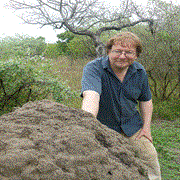
Merit Researcher, Entomology
Department:Life Sciences
Division:Insects Division
Division:Insects Division
Specialisms:
Termite ecology and systematics

Senior Curator in Charge, small orders
Department:Life Sciences
Division:Insects Division
Division:Insects Division
Specialisms:
Cicadidae, Embioptera, Ephemeroptera, Mecoptera, Megaloptera, Neuroptera, Odonata, Plecoptera, Raphidioptera, Trichopter…


Senior Researcher
Department:Earth Sciences
Division:Mineral and Planetary Sciences Division
Division:Mineral and Planetary Sciences Division
Specialisms:
economic geology, environmental effects of mining and ore processing, isotope mapping as tool in exploration targeting, …

Scientific Associate - Vertebrates
Department:Life Sciences
Division:Vertebrates Division
Division:Vertebrates Division


Future Leader Fellow, UKRI
Department:Earth Sciences
Division:Mineral and Planetary Sciences Division
Division:Mineral and Planetary Sciences Division


Senior Curator, Reptiles
Department:Life Sciences
Division:Vertebrates Division
Division:Vertebrates Division
Specialisms:
Collection Management, Conservation Biology, Curation, Fish, Natural History, Radiography, Reptilia, Taxonomy


Researcher, Entomology
Department:Life Sciences
Division:Insects Division
Division:Insects Division
Specialisms:
Chironomidae, Freshwater biology, Odonata, environmental change, palaeoecology

Senior Curator, Palaeobotany
Department:Earth Sciences
Division:Invertebrates and Plants Palaeobiology
Division:Invertebrates and Plants Palaeobiology
Specialisms:
Curation, Palaeobotany

GIS Manager
Department:Core Research Laboratories
Division:Collections Management Systems OLD
Division:Collections Management Systems OLD
Specialisms:
Georeferencing, Biodiversity, Geographical Information Systems (GIS), Geography and Biogeography, Remote Sensing, Spati…

Curator, Birds
Department:Life Sciences
Division:Vertebrates Division
Division:Vertebrates Division
Specialisms:
curation, osteoarchaeology, osteology collections, skeleton preparation, spirit collections

Scientific Associate - Invertebrates
Department:Life Sciences
Division:Invertebrates Division
Division:Invertebrates Division
Specialisms:
biodiversity, conservation, marine ecology, marine litter, microplastics, molecular ecology, population genetics, red li…

Postdoctoral Researcher, NERC Bees
Department:Earth Sciences
Division:Vertebrates and Anthropology Palaeobiology
Division:Vertebrates and Anthropology Palaeobiology
Specialisms:
Ancient DNA, Biomolecular Archaeology, Domestication, Ecology, Genomics, Population Genetics
Image
Required fields:- Image
- Alt text
Research Leader
Department:Earth Sciences
Division:Invertebrates and Plants Palaeobiology
Division:Invertebrates and Plants Palaeobiology


Research Assistant
Department:Life Sciences
Division:Diversity and Informatics Division
Division:Diversity and Informatics Division
Specialisms:
Biodiversity responses to human impacts, conservation assessments and prioritisation

Chemical Laboratories Manager
Department:Core Research Laboratories
Division:Imaging and Analysis Centre
Division:Imaging and Analysis Centre
Specialisms:
CHNS, ICP-AES, ICP-MS, alkali fusions, elemental analysis, geochemistry, intraplate volcanism, mantle, mantle xenoliths,…

Senior Curator, Birds
Department:Life Sciences
Division:Vertebrates Division
Division:Vertebrates Division
Specialisms:
eggs
nests
curation
risotto

Principal Researcher
Department:Earth Sciences
Division:Vertebrates and Anthropology Palaeobiology
Division:Vertebrates and Anthropology Palaeobiology
Specialisms:
Ancient DNA

Senior Curator
Department:Earth Sciences
Division:Invertebrates and Plants Palaeobiology
Division:Invertebrates and Plants Palaeobiology
Specialisms:
Cretaceous Asteroids, Fossil Echinoderms, Jurassic Crinoids, Jurassic Ophiuroids, Mesozoic conifers

Principal Researcher
Department:Earth Sciences
Division:Mineral and Planetary Sciences Division
Division:Mineral and Planetary Sciences Division
Image
Required fields:- Image
- Alt text
Genomic Technologies Manager and Scientific Lead
Department:Core Research Laboratories
Division:Molecular Biology Laboratories
Division:Molecular Biology Laboratories

Research Leader - Human Evolution
Department:Earth Sciences
Division:Vertebrates and Anthropology Palaeobiology
Division:Vertebrates and Anthropology Palaeobiology
Specialisms:
Human Origins, Palaeoanthropology

Curatorial Assistant, Collections Move
Department:Earth Sciences
Division:Vertebrates and Anthropology Palaeobiology
Division:Vertebrates and Anthropology Palaeobiology
Specialisms:
Bioarchaeology, Collections Management, Human Osteology, Palaeopathology

Postdoctoral Researcher, STFC
Department:Earth Sciences
Division:Mineral and Planetary Sciences Division
Division:Mineral and Planetary Sciences Division

Merit Researcher
Department:Earth Sciences
Division:Vertebrates and Anthropology Palaeobiology
Division:Vertebrates and Anthropology Palaeobiology
Image
Required fields:- Image
- Alt text
Technical Assistant, Wellcome
Department:Life Sciences
Division:Invertebrates Division
Division:Invertebrates Division

Manager, UK Species Inventory
Department:Life Sciences
Division:Angela Marmont Centre
Division:Angela Marmont Centre
Specialisms:
Identification of tachinid flies, biodiversity informatics, taxonomy & biological recording.

Data and Sample Coordinator, SCAN
Department:Life Sciences
Division:Parasites and Vectors Division
Division:Parasites and Vectors Division

Scientific Associate
Department:Earth Sciences
Division:Economic and Environmental Earth Sciences
Division:Economic and Environmental Earth Sciences
Specialisms:
mineral characterization, mineral nomenclature and classification, ore mineralogy, reflected light spectrophotometry

Task Force Assistant DIF
Department:Earth Sciences
Division:Collections
Division:Collections
Specialisms:
Bone histology, Crocodylomorpha, Fossil reptile curation, Pterosauria

Postdoctoral Researcher, Mactaggart
Department:Life Sciences
Division:Parasites and Vectors Division
Division:Parasites and Vectors Division
Specialisms:
Forensic entomology, insect ecology, insect morphology, taxonomy

Researcher
Department:Life Sciences
Division:Invertebrates Division
Division:Invertebrates Division
Specialisms:
Anguilla anguilla; Eriocheir sinensis, Chinese mitten crab, UK invasion and commercial exploitation; Thames submerged pl…

Principal Researcher
Department:Earth Sciences
Division:Invertebrates and Plants Palaeobiology
Division:Invertebrates and Plants Palaeobiology

Research Leader
Department:Life Sciences
Division:Diversity and Informatics Division
Division:Diversity and Informatics Division
Specialisms:
Biodiversity responses to human impacts, Extinction biology, Integrative biodiversity science, Macroevolution and macroe…

Metadata Librarian
Department:Library and Archives
Division:LA Researcher Services and Digital Delivery
Division:LA Researcher Services and Digital Delivery

Executive Director of Science
Department:Science Directorate
Division:Science Directorate
Division:Science Directorate
Specialisms:
Evolution of parasitism (helminths), Molecular diagnostics, Molecular systematics and phylogenetics, Natural history col…

Scientific Associate
Department:Life Sciences
Division:Invertebrates Division
Division:Invertebrates Division
Specialisms:
Helminth systematics; Helminth parasites of aquatic organisms; Trematoda; Nematoda; Monogenea; Editing; Faunisitcs

Library Special Collections Manager
Department:Library and Archives
Division:LA Special Collections
Division:LA Special Collections

Scientific Associate - Invertebrates
Department:Life Sciences
Division:Invertebrates Division
Division:Invertebrates Division

Senior Curator, Mammals
Department:Life Sciences
Division:Vertebrates Division
Division:Vertebrates Division
Specialisms:
Systematics of Afrosoricida and Soricomorpha. Biogeography of Madagascan and Southeast Asian small mammal fauna.

Researcher, Calleva
Department:Earth Sciences
Division:Vertebrates and Anthropology Palaeobiology
Division:Vertebrates and Anthropology Palaeobiology

Senior Curator, Arachnida and Myriapoda
Department:Life Sciences
Division:Invertebrates Division
Division:Invertebrates Division

Scientific Associate - Insects
Department:Life Sciences
Division:Insects Division
Division:Insects Division
Specialisms:
Culicidae: taxonomy, arboviral and filarial vectors., systematics and phylogeny; medical entomology of malaria
Image
Required fields:- Image
- Alt text
Special Collections Librarian
Department:Library and Archives
Division:LA Special Collections
Division:LA Special Collections

Laboratory Manager Microbiology/ Research Support
Department:Life Sciences
Division:Invertebrates Division
Division:Invertebrates Division

Research Leader, Informatics; Head of Division
Department:Life Sciences
Division:Diversity and Informatics Division
Division:Diversity and Informatics Division
Specialisms:
Biodiversity informatics, Phthiraptera., co-phylogeny, data publishing, digitisation, lice

Principal CiC, Vertebrates and Anthropology
Department:Earth Sciences
Division:Vertebrates and Anthropology Palaeobiology
Division:Vertebrates and Anthropology Palaeobiology
Specialisms:
Analysis of trauma, Forensic anthropology, Forensic archaeology, Human Osteology, Physical anthropology, Repatriation

Curator, Diatoms
Department:Life Sciences
Division:Algae, Fungi and Plants Division
Division:Algae, Fungi and Plants Division
Specialisms:
Curation, collections management

Micropalaeo Sector Leader and Head of Division
Department:Earth Sciences
Division:Economic and Environmental Earth Sciences
Division:Economic and Environmental Earth Sciences
Specialisms:
Biostratigraphy, Diatom Analysis, Geoarchaeology, Holocene Sea-Level Change, LGIT, Micropalaeontology, Pollen Analysis, …

Postdoctoral Researcher,Co-Evolution Initiative
Department:Earth Sciences
Division:Invertebrates and Plants Palaeobiology
Division:Invertebrates and Plants Palaeobiology
Specialisms:
Palaeosols; modern soils; sedimentary petrology; fluvial processes; sedimentary geochemical analysis; terrestrial geolo…


Senior Curator, Marine Mollusca
Department:Life Sciences
Division:Invertebrates Division
Division:Invertebrates Division
Specialisms:
Marine Mollusca, curation, history of collection, taxonomy

Senior Curator, Fossil Mammals
Department:Earth Sciences
Division:Vertebrates and Anthropology Palaeobiology
Division:Vertebrates and Anthropology Palaeobiology
Specialisms:
Collections management, Fossil wombats, Museum digitisation, Project management

Senior Curator, Lepidoptera
Department:Life Sciences
Division:Insects Division
Division:Insects Division
Specialisms:
Curation of Insect Collections, Lepidoptera in the families Sphingidae, Limacodidae & Lasiocampidae.

Curator, British and Irish Herbarium
Department:Life Sciences
Division:Algae, Fungi and Plants Division
Division:Algae, Fungi and Plants Division
Image
Required fields:- Image
- Alt text
Postdoctoral Researcher, Leverhulme
Department:Life Sciences
Division:Invertebrates Division
Division:Invertebrates Division
Image
Required fields:- Image
- Alt text
Electron Microscopist
Department:Core Research Laboratories
Division:Imaging and Analysis Centre
Division:Imaging and Analysis Centre

Researcher, Entomology
Department:Life Sciences
Division:Insects Division
Division:Insects Division
Specialisms:
Psylloidea, digitising and georeferencing museum collections, evolutionary patterns and processes, insect-plant interact…

Metadata Librarian
Department:Library and Archives
Division:LA Researcher Services and Digital Delivery
Division:LA Researcher Services and Digital Delivery

Electron Probe Microanalyst
Department:Core Research Laboratories
Division:Imaging and Analysis Centre
Division:Imaging and Analysis Centre
Specialisms:
Earth and Planetary Sciences; Hypervelocity Impact, Scanning Electron Microscopy (SEM); Electron Probe X-ray Microanalys…
Image
Required fields:- Image
- Alt text
Geo-referencer, Special Funds
Department:Core Research Laboratories
Division:Collections Management Systems
Division:Collections Management Systems

Postdoctoral Researcher UKRI FLF Project
Department:Earth Sciences
Division:Economic and Environmental Earth Sciences
Division:Economic and Environmental Earth Sciences

Analytical Geochemist
Department:Core Research Laboratories
Division:Imaging and Analysis Centre
Division:Imaging and Analysis Centre
Image
Required fields:- Image
- Alt text
Molecular Laboratory Assistant
Department:Core Research Laboratories
Division:Molecular Biology Laboratories
Division:Molecular Biology Laboratories

Merit Researcher
Department:Life Sciences
Division:Vertebrates Division
Division:Vertebrates Division
Specialisms:
Caecilians, Herpetology, Phylogenetics, Systematics

Loans and Exhibitions Coordinator Assistant
Department:Life Sciences
Division:Collections
Division:Collections

Merit Researcher
Department:Life Sciences
Division:Algae, Fungi and Plants Division
Division:Algae, Fungi and Plants Division
Specialisms:
Red algal taxonomy, ecology and conservation. Genomic approaches. Response to environmental change., evolution, life his…

Vertebrates and Anthropology PhD Student
Department:Earth Sciences
Division:Vertebrates and Anthropology
Division:Vertebrates and Anthropology
Image
Required fields:- Image
- Alt text
Postdoctoral Researcher, Leverhulme Novelty
Department:Life Sciences
Division:Vertebrates Division
Division:Vertebrates Division
Image
Required fields:- Image
- Alt text
Senior Curator, Bryophytes
Department:Life Sciences
Division:Algae, Fungi and Plants Division
Division:Algae, Fungi and Plants Division

Curator, Benthic Molluscs
Department:Earth Sciences
Division:Invertebrates and Plants Palaeobiology
Division:Invertebrates and Plants Palaeobiology
Specialisms:
CT scanning, Palaeontology, marine bivalves, marine molluscan fauna of New Zealand, shape analysis
Image
Required fields:- Image
- Alt text
Interim Head of Digital Systems and Services
Department:Library and Archives
Division:LA Researcher Services and Digital Delivery
Division:LA Researcher Services and Digital Delivery

Innovation Manager
Department:Life Sciences
Division:Diversity and Informatics Division
Division:Diversity and Informatics Division
Specialisms:
Biodiversity Informatics, Coreoidea, Data Publication, Digital Project Management, Digitisation, Hemiptera


Project Officer, Wellcome Learning +
Department:Life Sciences
Division:Angela Marmont Centre
Division:Angela Marmont Centre
Image
Required fields:- Image
- Alt text
Scientific Associate
Department:Life Sciences
Division:Invertebrates Division
Division:Invertebrates Division
Specialisms:
ciliate systematics; ciliate biodiversity

Senior Curator, Bryozoa
Department:Life Sciences
Division:Invertebrates Division
Division:Invertebrates Division
Specialisms:
Bryozoa, Ectoprocta, Entoprocta, Kamptozoa, curation, history of bryozoology, taxonomy
Image
Required fields:- Image
- Alt text

Science Digital Programme Manager
Department:Science Directorate
Division:Science Directorate
Division:Science Directorate

Project Coordinator, Wellcome Learning +
Department:Life Sciences
Division:Angela Marmont Centre
Division:Angela Marmont Centre

Curatorial Assistant, Collections Task Force
Department:Earth Sciences
Division:Collections
Division:Collections


Researcher, Pteridophytes
Department:Life Sciences
Division:Algae, Fungi and Plants Division
Division:Algae, Fungi and Plants Division

Principal Researcher
Department:Life Sciences
Division:Insects Division
Division:Insects Division
Specialisms:
Lepidoptera, cladistics, morphology, nomenclature, phylogenetics, taxonomy

Digital Special Collections Librarian
Department:Library and Archives
Division:LA Special Collections
Division:LA Special Collections

Senior Analytical Chemist
Department:Core Research Laboratories
Division:Imaging and Analysis Centre
Division:Imaging and Analysis Centre