Discover a haven for wildlife and people in the heart of London.
Journey beneath the waves and meet some of the fiercest marine reptiles that have ever lived.
Our research themes focus our work so we can find solutions to some of the biggest global challenges.
Oceans
Discover a goliath of the ancient seas and explore why turtles never got so big again.
Wildlife photography
Get a sneak peek at some of the incredible images and stories that’ll feature in our upcoming exhibition.
Science news
Musango matusadonaensis is the fifth dinosaur ever named from Zimbabwe.
Collections
Discover some of the sensational specimens Mary Anning discovered that are now part of the collections we look after.
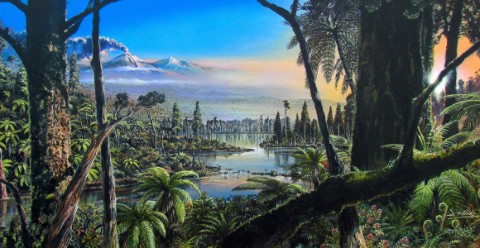
Antarctica was once a thriving, forested ecosystem filled with a diversity of dinosaur life.
An ancient reptile once thought to be an early turtle ancestor actually belonged to an entirely different group.
Find out what fossils have revealed about ichthyosaurs, which included the biggest marine reptile that ever lived.
News
Fossils discovered in Niger named as Spinosaurus mirabilis.
Find out what plesiosaur fossils have revealed about these animals and how big they could grow.
Discover more about Mosasaurus’ size, where its fossils are found and how realistic Jurassic World’s mosasaur really is.
A dinosaur named Ajkaceratops has revealed that relatives of Triceratops lived in Europe after all.
The mystery surrounding dozens of small dinosaur fossils has finally been solved.
Life may have bounced back more quickly than expected after the worst mass extinction in history.
An extinct snake named Paradoxophidion richardoweni has slithered its way out of obscurity.
Zavacephale rinpoche is the oldest and most complete pachycephalosaur ever found.
An extinct species known as Agriodontosaurus helsbypetrae has revealed new twists in the tale of lizards and their relatives.
Dinosaurs
Discover why Morocco is so important for studying dinosaurs.
The world’s most unusual dinosaur is even stranger than first realised.
Discover why the commercial fossil trade isn’t simply black and white.
The name of Istiorachis macarthurae honours the sailor Dame Ellen MacArthur.
The 76-million-year-old trackways could offer a rare glimpse into the social lives of these ancient reptiles.
Mirasaura grauvogeli’s crest looks feather-like, but evolved entirely separately.
One of the first known ichthyosaurs, Temnodontosaurus, was a covert ocean predator.
A fossil of an extinct reptile known as a silesaur suggests that the size of early dinosaurs might have been underestimated.
Bone-eating worms have been cleaning up the ocean floor for over 100 million years.
British wildlife
There’s an abundance of wildlife that can be spotted along the coasts of the British Isles.
Sphenodraco scandentis would have climbed among the trees of ancient Jurassic forests.
Enigmacursor mollyborthwickae is going on display in our Earth Hall.
The early evolution of pterosaurs is a mystery – and the ancient climate might explain why.
Fossil footprints could push back the origins of the amniotes by as much as 40 million years.
The ‘king’ of the dinosaurs might not be the all-American predator it appears to be.
What on Earth?
Life has found very clever ways to survive in the most extreme places.
Marmoretta oxoniensis was a climber, not a swimmer.
The earliest example of an important and widespread group of dinosaurs has been found in North Africa.
The remains of the earliest dinosaurs could lie beneath the Amazon rainforest and the Sahara Desert.
The UK’s biggest-ever site of dinosaur footprints has been discovered in Oxfordshire.
Spinosaurs, tyrannosaurs and relatives of Velociraptor once stalked England’s south coast.
Threordatoth chasmatos was one of the last survivors of a once-widespread group of lizard-like animals.
The whale-sized shastasaurids went extinct over 200 million years ago.
New research has revealed how birds changed from rigid raptors to flexible fowl.
Get the answers to some of the most frequently asked questions about these fascinating, slithering reptiles.
Some of Earth’s most successful herbivores may have had hundreds of thousands of teeth in their lifetime.
The prime suspect in the extinction of the dinosaurs was no ordinary asteroid.
The social skinks are helping scientists answer fundamental questions about evolution.
Iron-rich enamel helps the world’s largest living lizard to keep its teeth sharp.
Comptonatus chasei is the newest member of the Iguanodon family.
A new species of 237-million-year-old reptile has been uncovered in Brazil.
Scientists are trying to unravel the mysteries of an extinction event that occured in North America at the end of the Jurassic.
By the end of the Jurassic Period, dinosaurs ruled our planet. But how they became such a diverse group remains a mystery.
Musankwa sanyatiensis is just the fourth dinosaur species ever found from Zimbabwe.
A fossil jawbone, which may belong to the largest marine reptile ever discovered, has been found in Somerset.
They might not have legs, but snakes are outpacing their relatives in the race to evolve.
A new study of Tridentinosaurus suggests that preserved skin is just black paint.
Discovered in Scotland, Ceoptera evansae has been named as a new species of pterosaur.
A case of mistaken fossil identity has been resolved after 20 years.
An extraordinary dinosaur fossil has revealed what young tyrannosaurs were eating over 70 million years ago.
Crocodiles have a deep and varied evolutionary past.
Jaculinykus yaruui is thought to have dug for food using an enormous thumb on each hand.
More surprising is that the vast majority of herpetology records are unsexed.
Researchers are hot on the trail of Morocco’s missing dinosaurs.
Though the Portland plesiosaur made headlines in the 1960s, it has never been formally described.
The new species, named Venetoraptor gassenae, suggests that the lagerpetids were more diverse than previously realised.
Nile crocodiles may have a limited ability to understand our emotions.
Sea snakes are often feared. But are they dangerous or do we just need to get to know them better?
How much do you know about these incredible marine reptiles?
The Victorian grassland earless dragon was last seen in 1969, but recent surveys of its habitat have revealed new populations of the species.
The ancient relative of some of the largest ever animals may have been lighter than some humans.
The oldest group of lizards has just gained their newest member.
An ichthyosaur fossil found in Svalbard is finally revealing its secrets 15 years after it was discovered.
Protathlitis cinctorrensis is the latest to be discovered in Spain, adding to the evidence that spinosaurs first evolved in Europe.
Digital reconstructions of broken fossils have revealed more about the life of an ancient crocodile-like predator.
New research suggests that ichthyosaurs may have pre-dated the age of the dinosaurs after surviving Earth's largest mass extinction event.
The isolated teeth were identified using machine learning models, and could represent some of the earliest relatives of birds ever discovered.
Explore our collections and discover some of the many specimens you won't see on a regular visit to the Museum.
The dwarf reed snake startles potential threats before using a burst of speed to disappear into the undergrowth.
The Cretaceous Period is famous for ending with a massive asteroid impact, but what was our planet like in the millions of years before that?
Rather than keeping them permanently exposed, like crocodiles, a new study suggests the teeth of theropods would have been kept behind lips.
Dinosaurs are the largest land animals to ever live. Titanosaurs were the biggest of them all. Explore how they were able to grow to such a size.
The discovery was made three decades after the species was first uncovered as scientists try to understand more about how sauropods evolved in what is now eastern Asia.
While these strandings are thought to be the result of an unseasonably stormy year, climate change could make them more common in future.
Get to know some of the largest dinosaurs to have ever walked the planet.
A fossil found in northern Britain is revealing insights into the behaviour of a 166-million-year-old carnivorous dinosaur.
It may have been a case of matter over mind for dinosaurs which lived around water.
More than 250 titanosaur eggs have been uncovered in India, revealing more about the lives of some of the largest animals which ever lived.
Though it may have gone extinct over 600 years ago, understanding more about Astrochelys rogerbouri could help to save its living relatives.
Winter is a time where many animals conserve their energy, fly south or grow a thicker coat.
Competition between ankylosaurs may be responsible for their iconic tail clubs.
A new species of extinct lizard has been described from the Museum's collections.
Measuring almost four metres in length, Leviathanochelys aenigmatica reveals that giant turtles were more common than previously thought.
The first complete ichthyosaur skeleton has resurfaced, despite being thought destroyed during World War Two.
The most complete Jurassic fossil lizard ever found has been discovered in Scotland.
Scavengers could help to preserve the soft tissue of the ancient reptiles by removing flesh and fluid from the body shortly after death.
Living over 200 million years ago, Scleromochlus helps to show how ancient reptiles took their first steps towards flight.
The description of an extinct lizard-like animal may help reveal why its kind were rapidly pushed to the edge of extinction.
Researchers have reconstructed one of the first gliding reptiles in extraordinary detail.
As the world recovered from a volcanic extinction event, Lesothosaurus may have banded together to help ward off predators.
The tiny arms of Tyrannosaurus rex may bring ridicule, but a new dinosaur reveals they were part of a much larger trend.
Some of the largest animals that ever lived retained their size right up until they were wiped out 200 million years ago.
Habitat loss and human persecution are the key drivers of their decline, with crocodiles and turtles most at risk.
The world's first flying vertebrates may also have been some of the biggest show-offs.
The snakes can move their ribs independently to suck in air while others are constricting.
Spinosaurs were some of the only dinosaurs that spent much of their lives in water.
There is currently not enough evidence to prove they are a genuine new species, or just a distinct population of an existing one.
Even the most carnivorous lizard can bite no harder than herbivores of the same size, Museum researchers have found.
The neck of a diplodocid shows evidence of a disease that still affects birds today.
Scientists believe that the behavioural change may help the reptiles wash away poison from the cane toad, an amphibian which has decimated Australian biodiversity.
The largest and most complete ichthyosaur ever found in the UK has been unearthed in the nation's smallest county.
The first large raptor to ever be discovered in the UK has been described as a new species.
Biodiversity
Over 30 species around the world are named after Christmas Day because of their bright colours, where they come from or when they reproduce.
The largest-ever flying animal acted like a giant heron, plucking prey from the water and launching itself into the air.
An ancient relative of modern crocodiles and alligators shows that their semi-aquatic lifestyle dates back over 150 million years.
Snakebite is one of the world’s deadliest neglected health issues. But what does venom actually do to you?
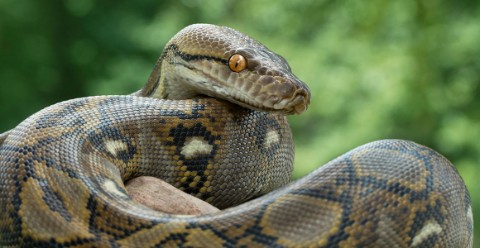
Which is bigger, an anaconda or a python? Discover some of the world’s giant snakes.
Growth is usually thought of as from small to large, but marine iguanas occasionally do the opposite.
They cover an enormous area of the UK and are home to many rare and declining wild plants, insects, amphibians and more.
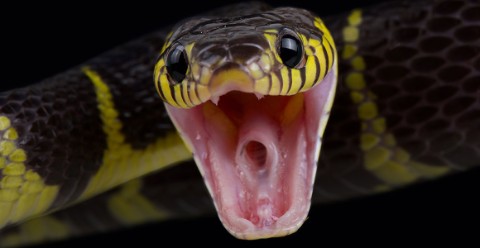
If you see a snake blink at you, it's not a snake.
Tracking the diversity of turtles could also give us clues as to how they might respond to increasing pressures in the future.
What can we learn from scanning snakes?
Nopcsa was ahead of his time, publishing many creative scientific theories on dinosaurs and other reptiles. He was also a spy and a would-be king.
They include new dinosaurs, an ancient wombat and a giant shark.
This long-necked skeleton is Attenborosaurus, an extinct marine reptile named after legendary broadcaster Sir David Attenborough.
When Patrick started caring for the Natural History Museum’s fish specimens, he became one of our first black curators.
There are four species of snake found in Britain - but are they dangerous to people?
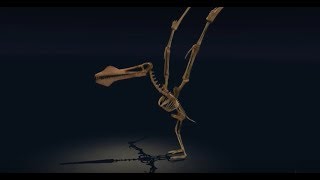
This animal is Anhanguera, a flying reptile that lived with the dinosaurs. Have a look at how it might have flown.
Have you ever seen a cobra spit venom in super slow motion?
Mary was a pioneering palaeontologist and fossil collector. Her lifetime was a constellation of firsts.
From snake-filled projectiles and medieval remedies to the very first antivenom, our relationship with venomous creatures has a colourful history.
Find out how the Gila monster's venom has the ability to save lives.
The first major study into the genes that control vision in snakes has found that the reptiles match their vision to their lifestyles.
We use cookies to give you the best online experience. We use them to improve our website and content, and to tailor our digital advertising on third-party platforms. You can change your preferences at any time.