Discover a haven for wildlife and people in the heart of London.
Journey beneath the waves and meet some of the fiercest marine reptiles that have ever lived.
Our research themes focus our work so we can find solutions to some of the biggest global challenges.
Science news
The possibility of life on other planets is one of the biggest mysteries in science.
Space
Dr Helena Bates explains what it’s like to be a researcher of meteorites, how she got into this career and shares advice for budding space experts.
Dinosaurs
Discover why the commercial fossil trade isn’t simply black and white.
Moon rock collected on the last Apollo mission is revealing more about one of the Moon’s most unusual structures.
Mineral with a chemical composition very similar to that of the fictional Kryptonite could help Europe transition to a greener future.
News
The first samples returned from the far side of the Moon suggest it's 10-100 times drier than the side nearer Earth.
Over 15,000 mounds are scattered across Mars’ lowlands – but until recently, no one knew how they got there.
Scientists are studying microbial structures in extreme environments to learn more about early life.
Discover a treasure trove of fossils just off Britain’s south coast.
NASA’s Perseverance rover may have discovered organic molecules on the surface of Mars.
All it takes is a bit of practice and plenty of patience.
Collections
Our scientists have been looking for a rock that formed so long ago it was on Earth before complex life lived on land.
A serendipitous discovery revealed that a beautiful mineral has been hiding a secret for over 170 years.
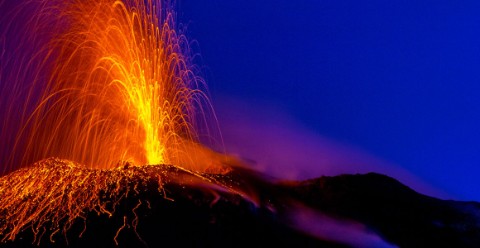
An unexpected series of eruptions at Stromboli may be due to changes in the volcano's internal 'plumbing'.
What on Earth?
Discover what a supervolcano is, what their eruptions are like and how they impact our planet.
Minute structures found in 3.48-billion-year-old Australian rocks are the oldest evidence of life on Earth.
Investigating Mars' dry lakes could help scientists to discover how life began on Earth.
The specimen is currently on display at the Museum in the Minerals gallery.
While its impacts are uncertain, it could have caused the world to warm significantly.
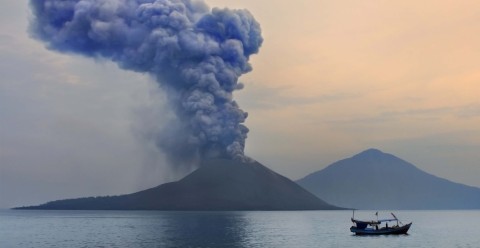
The way a volcano is filled with boiling hot magma can help improve forecasts of how it will next erupt.
Anthropocene
The UK is one of the largest producers of household e-waste in the world.
The world’s rarest mineral resources are in your hands.
A satellite has revealed ancient Martian rivers in more detail than ever before.
Dinosaur bones aren't the only way we can learn about the ancient reptiles that once roamed around our planet.
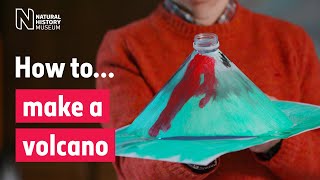
Follow our guide to make a simple volcano from a plastic bottle and watch it erupt.
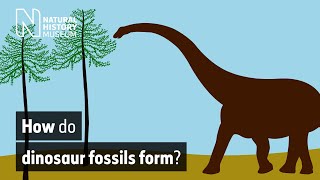
Even though dinosaurs lived millions of years ago, we know about them thanks to fossils. Watch our animation to find out how dinosaur fossils formed.
Discover how palaeontologists find and dig up prehistoric reptiles.
Growing up in the Apollo era of the seventies, Prof Sara Russell fantasised about working on space missions.
Dr Susie Maidment shares what it’s like to be a dinosaur researcher, how she got into this career and advice for budding palaeontologists.
Get to know the Museum scientists working on the latest dinosaur discoveries.
The face of modern science is young, black, female and ambitious.
The mystery of blue Moons lies in the ashes of volcanic eruptions.
Discover the important contributions made by one of London’s first woman geologists.
They include new dinosaurs, an ancient wombat and a giant shark.
Why have so few dinosaur fossils been found in Ireland? It's all to do with the island's geological history.
This long-necked skeleton is Attenborosaurus, an extinct marine reptile named after legendary broadcaster Sir David Attenborough.
Researchers have found evidence that suggests Mars once had an ancient ocean and a water cycle similar to Earth's.
Scientists have concluded that there is not enough carbon dioxide on Mars for humans to live on the planet.
To help us tell fact from science fiction, scientists and engineers involved in the ExoMars 2020 program discuss the latest on the search for life on Mars.
A meteorite sample from the Museum collection is revealing more about how and when the crust of the Red Planet formed.
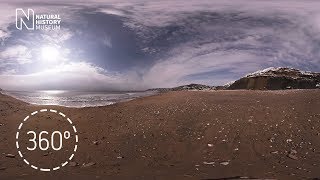
Go on a virtual fossil hunt along Charmouth Beach.
Before the Earth and Moon, there was proto-Earth and Theia. Professor Sara Russell explains the story of Earth’s closest companion.
Unearth 15 facts about William Smith’s pioneering map, which was published in 1815.
We use cookies to give you the best online experience. We use them to improve our website and content, and to tailor our digital advertising on third-party platforms. You can change your preferences at any time.