Discover a haven for wildlife and people in the heart of London.
Journey beneath the waves and meet some of the fiercest marine reptiles that have ever lived.
Our research themes focus our work so we can find solutions to some of the biggest global challenges.
News
Professor Chris Stringer has been awarded a CBE and Dr Sandra Knapp and Dr Richard Fortey an OBE.
Science news
Current turtle habitats are likely to become unsuitable, but new areas could become available.
One of the most unusual self-defence techniques in the animal kingdom has been uncovered.
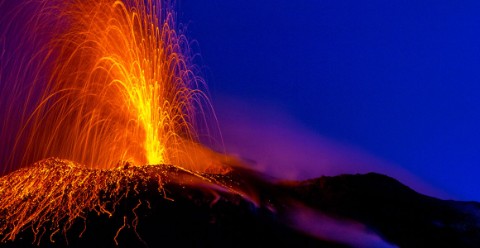
An unexpected series of eruptions at Stromboli may be due to changes in the volcano's internal 'plumbing'.
Intensively used land isn't just harmful to biodiversity we can see – it's also harming the wildlife living under the ground.
A walrus has been seen hauled out on a beach in Hampshire, UK.
Competition between ankylosaurs may be responsible for their iconic tail clubs.
DNA found in Greenland has broken the record for the oldest yet discovered.
A new species of extinct lizard has been described from the Museum's collections.
Discover the stories behind the stunning images from Wildlife Photographer of the Year's 2023 People's Choice Award.
Leeches, mites and plants found at the site are revealing the ecosystems ancient animals walked over 260 million years ago.
Native mussels in the River Thames are in decline, with some species having disappeared since a landmark study in 1964.
Data being collected from the surface of Mars are already providing a glut of information about Jezero crater.
A chink in the armour of giant South American armadillos may have left them vulnerable to human hunting.
Algae and bacteria were on the menu for the early animal Kimberella shortly before it was buried over 500 million years ago.
The next rover to land on Mars could discover signs of a once mighty river ecosystem.
Measuring almost four metres in length, Leviathanochelys aenigmatica reveals that giant turtles were more common than previously thought.
The origins of a meteorite which lit up skies above the UK last year have been revealed.
Frog lenses develop differently depending on what environment they will live in as adults.
Fossils discovered in Sussex were compared to human remains found in Spain from a similar time period to see if the populations are linked.
Minute structures found in 3.48-billion-year-old Australian rocks are the oldest evidence of life on Earth.
A new study has looked at what is driving the biodiversity crisis.
Fish raised in their mother's mouth can sometimes end up their parent's next meal.
The discovery of a seven million-year-old gibbon fossil has filled a long-elusive gap in the fossil record.
Demands for climate action are stronger than ever as the world comes together once again to discuss the rapidly warming world.
Dam building in Australia is reducing gene flow between platypus groups, piling pressure on populations whose numbers are already falling.
The first complete ichthyosaur skeleton has resurfaced, despite being thought destroyed during World War Two.
The question of how the Neanderthals died out remains one of the biggest mysteries in human evolution.
The study could help in predicting how species will respond to the rapidly changing environment.
The aye-aye is one of 12 primates that pick their nose - but we have no good reason why the behaviour evolved.
The most complete Jurassic fossil lizard ever found has been discovered in Scotland.
The sequencing of the oldest human DNA in the UK so far.
While their function remains uncertain, the sinuses provide an insight into how ancient human skulls changed over time.
A herd of bison released into woodland near Canterbury, Kent, have surprised conservationists by giving birth to a calf.
A large part of the asteroid belt may have been formed out on the fringes of the Solar System.
Neanderthals may have lived in small groups of around 10 to 20, with females moving between the different communities.
Carcinogenic fuel, explosives and chemical weapons are leaking into the seas from sunken naval vessels.
Red squirrels are developing differently depending on the region of the UK they live in.
We know the problems, but we also know how to fix them.
Scavengers could help to preserve the soft tissue of the ancient reptiles by removing flesh and fluid from the body shortly after death.
The new Global Typology of Ecosystems provides an important step towards characterising the true diversity of life on Earth at its largest scale.
A new project aims to use the Museum's historic collections to investigate how the genome of wheat has changed.
Winners of Wildlife Photographer of the Year 2022 announced.
A process mosquitoes use to weather harsh conditions offers new opportunities in the fight against malaria.
Living over 200 million years ago, Scleromochlus helps to show how ancient reptiles took their first steps towards flight.
Mass producing the proteins in the saliva could provide a cheap and effective way to break down polyethylene waste.
Professor Svante Pääbo, considered a founding father of palaeogenomics, has helped to reveal how humans evolved, and how we relate to our closest relatives.
A fossil from China has filled in a major gap in the evolutionary tree for life on Earth.
In the midst of war, scientists have been working to protect historic artworks.
Researchers have caught a glimpse of the cosmos just two million years after the formation of the solar system.
Termites could reduce the amount of carbon stored in wood as the world gets hotter and drier.
The people after which England is named made up more than three quarters of the nation's genetic ancestry during the early Middle Ages.
Investigating Mars' dry lakes could help scientists to discover how life began on Earth.
The dental record of a small animal has pushed back the origin of mammals by 20 million years.
The description of an extinct lizard-like animal may help reveal why its kind were rapidly pushed to the edge of extinction.
Female wildebeest are engaged in an evolutionary arms race - but scientists aren't sure why.
Going green is no longer just the smart decision – it's also the most profitable one.
Researchers have reconstructed one of the first gliding reptiles in extraordinary detail.
The Natural History Museum pays tribute to Her Majesty The Queen.
Greta Thunberg and the Museum have teamed up to help educate students on the importance of tackling both the climate and biodiversity crises.
The works are part of the wider Urban Nature Project.
A new study shows the tunnelling mammals are among a handful of mammals known to be capable of an unusual process known as Dehnel's phenomenon.
NASA has launched its brand new rocket on its first uncrewed test flight to the Moon.
Andean mice grow differently depending on what side of the mountain they come from.
Carbon dioxide could be being undervalued by over 70% in the USA, making the cost effectiveness of climate action appear much lower than it actually is.
The twelfth century skeletons have provided an unprecedented look at the genetic history of Ashkenazi Jews.
As the world recovered from a volcanic extinction event, Lesothosaurus may have banded together to help ward off predators.
For the first time the records of ancient British birds have been formally incorporated into the British List.
Bumblebees are getting more stressed as the climate warms.
Scientists and conservationists are continuing to investigate this phenomenon, with the exact reasons remaining unclear.
Debate over the use of artificial and natural lawns has been rekindled in recent weeks as temperatures surge across the UK.
An insect last seen in 1869 has sung again, which could help give researchers clues about where the insect might still be living.
The tropical arachnids have been named after the musician to draw attention to the threats they face.
A beluga whale has been spotted heading towards Paris, thousands of miles from its natural habitat.
The protective equipment that kept us safe during from COVID-19 could pose a lethal threat to nature.
The ability of dolphins and toothed whales to echolocate is shaped before they're even born.
While the evolutionary history of the bears remains uncertain, it contributes evidence to suggestions that panda bears could have evolved in Europe.
The 560-million-year-old specimen of Auroralumina attenboroughii reveals that the origins of complex life may date back further than was previously known.
Over 30 potential new species, from starfish to sea cucumbers, have been discovered living at the bottom of the sea.
A disease that causes starfish to disintegrate has been reported in the UK and Europe, raising fears for marine ecosystems.
Records for the highest UK temperature have been set three times already in the twenty-first century and could continue to do so as global warming takes its toll.
The days of the most distinctive bird species could be numbered as the most unusual forms bear the brunt of global extinctions.
Digitising Museum collection leads to rediscovering a moth collected by Richard Owen
As mammaliamorphs switched from being cold to warm blooded, new behaviours, habitats and ways of living became available to them.
The evolution of penguins has been laid out in unparalleled detail, revealing how they came into being.
Frogs with less diverse microbiomes are more severely affected by chytridiomycosis than those with a greater range of microbes, suggesting possible new treatments.
The effect of rising global temperatures on human health may require changes in our behaviour, mindset and the spaces we live in.
Loud sound bursts throwing cetaceans out of balance and risk their health, amid growing concern over the impacts of anthropogenic noise pollution.
Measuring almost two metres tall, Leptoptilos robustus would have lived in a unique ecosystem which included the mysterious miniature human relative Homo floresiensis.
With targets spanning the birth and death of stars, the James Webb Space Telescope is set to give us our clearest view of the universe so far.
Some individuals have been found as much as 2.8 metres above the ground, but no one is quite sure why.
The tiny arms of Tyrannosaurus rex may bring ridicule, but a new dinosaur reveals they were part of a much larger trend.
Over 40% of the world's rivers could contain harmful levels of pharmaceuticals.
Despite vast investment in climate change, much less attention is being paid to plastic pollution - and we need to fight both together.
The world's largest waterlily has been discovered in the wetlands of northern Bolivia.
By scaring away the great whites, the killer whale hunters are altering the habits of other sharks, abalone and even penguins.
Nepenthes pudica is changing what we know about carnivorous species, but may already be Critically Endangered.
The UK is on track to cut just 40% of the emissions required to reach net zero, the country's top climate body has warned.
Thousands of seabirds are dropping dead from bird flu at some of the UK's most important seabird colonies.
As we encroach more on the natural world, new diseases are likely to become more common.
Measuring over a centimetre long, Thiomargarita magnifica is over 5000 times bigger than the average microbe.
Discussions which will define the future of the world's biodiversity are set to take place in Canada later this year.
A Critically Endangered species of albatross may be in more danger than previously thought.
The beetle usually lives on the warm Mediterranean coast.
A group of newly-discovered polar bears may reveal how the Arctic mammals could survive climate change.
The Ryugu sample is some of the most pristine material from the solar system.
The largest meat-eating dinosaur ever found in Europe has been found.
Miranda Lowe has now been recognised for her brilliant work by being awarded a CBE.
Collections
The specimen is currently on display at the Museum in the Minerals gallery.
Believed to be at least 4,500 years old, Shark Bay's Posidonia australis covers an area bigger than Washington DC.
Great whites and megalodon may have been competing for the same prey in the last years of the megalodon's life.
Genyornis newtoni may have become extinct after humans stole and ate its eggs.
While more butterflies are being threatened, the report finds they can recover with our help.
Some dinosaurs, such as stegosaurs, may have needed to bask in the sun to keep their body temperature constant.
A new report lays out how we can prioritise the best selection of habitats to give the UK's 24 species of bumblebee a boost.
The Museum will open a new facility at the Thames Valley Science Park in collaboration with the University of Reading.
Plankton which help feed the ocean, lock away carbon dioxide and even influence the weather may not be as vulnerable to climate change as feared.
Scientists have called for greater protections for species which are at risk of being collected into extinction.
The tooth of a young girl living hundreds of thousands of years ago may be from the Denisovans, an extinct hominid species of which very little is known.
Crowdsourced photographs are helping to demonstrate the value of nature reserves to one of the world's largest fish.
Another bird from the island of the dodo is in danger of becoming extinct, scientists have warned.
While the plants flowered, lunar soils negatively affected their growth, meaning there is still some way to go until farming on the Moon becomes a viable prospect.
Male trilobites could have acted like modern horseshoe crabs, using claspers to grip females and increase their chance of fathering young.
The 1918 influenza pandemic, also known as Spanish flu, can help scientists understand how modern viruses evolve as they spread across the world.
We now know how whales evolved from furry, four-legged critters to giants of the ocean.
The UK's insect population has fallen sharply as the invertebrates are affected by rising temperatures and fragmented habitats.
There are fewer than 10 vaquita left in the world, but it's still possible to save the species.
Moon dust can be used to create the materials needed to explore space.
Some of the largest animals that ever lived retained their size right up until they were wiped out 200 million years ago.
Diseases which spread between animals and humans, such as Ebola virus, are likely to spread further than ever before.
Habitat loss and human persecution are the key drivers of their decline, with crocodiles and turtles most at risk.
Analyses of three meteorites suggest that the raw material for the origin of life may have formed in space.
A new report from the British Ecological Society warns the UK needs to change how it looks after biodiverse areas of the country.
Over half of all seabirds have been lost in the past 50 years, seeing less of the nutrients vital to life moved from sea to land.
A new natural history course for UK high school students will help pupils develop a deeper understanding of the natural world.
It beats the previous record holder by tens of millions of years.
The world's first flying vertebrates may also have been some of the biggest show-offs.
Though Gasteranthus extinctus may be Critically Endangered, there is hope it can be brought back from the brink.
Freezing koala eggs and sperm may help to buy the species time while wider threats are tackled.
Some of the species, described for the first time, are smaller than a 1p coin.
Understanding how bats, which are one of nature's largest disease reservoirs, have changed over time can help scientists to identify new disease hotspots.
Dating back to over 13 billion years ago, HD1 could have formed shortly after the Big Bang, with properties unlike any modern galaxy.
With the finding yet to be published in a scientific journal, debate continues over whether this could be the case.
In response to a warming world, many species are physically changing their body sizes.
The tropics have long been perceived as being a riot of colour.
We have just three years to keep the dream of 1.5⁰C of global warming alive.
The Big Plastic Count will take place between 16 and 22 May
As climate change intensifies, a greater number of wildfires will increase the risk from ultraviolet radiation.
The bittern, whose call is as loud as a jet taking off, is returning to areas of the country it hasn't been seen in for centuries.
The snakes can move their ribs independently to suck in air while others are constricting.
Spinosaurs were some of the only dinosaurs that spent much of their lives in water.
NASA's Space Launch System (SLS) is undergoing its last big test before its first flight.
Populations of raptors are over 50,000 birds smaller than they would otherwise be.
The reintroduction is another step forward for campaigns to return the aquatic rodent to the UK.
White clovers are adapting to face the dryness of cities globally by reducing production of anti-herbivore compounds.
The minerals, Tanzanite, Morganite and Rhodochrosite, are richly coloured, great in size and scientifically significant.
It adds to the understanding of how these curious dinosaurs evolved and spread around the world.
Living over 40 million years before the sabre-tooth tiger, Diegoaelurus vanvalkenburghae may have preyed on rhinos and primates in the forests of California.
There is currently not enough evidence to prove they are a genuine new species, or just a distinct population of an existing one.
While its impacts are uncertain, it could have caused the world to warm significantly.
The Earthshot Prize is the most prestigious environmental prize in the world.
While it could provide a useful stopgap, there is no guarantee the technique, or whales, will ever fully restore what has been lost.
175 countries voted to start preparations for a new treaty aimed at regulating and controlling plastics last week.
The fossil uncovered in Montana suggests the ancestor of all squid and octopus had 10 arms, with some of these then lost by its descendants.
The finding could offer insights into the impact of climate change on its modern relatives.
Bashanosaurus primitivus adds to evidence the group of dinosaurs may have originated in Asia.
Understanding how frog eyes evolved can help explain how the diverse group came into being.
Palaeontologists have reacted with scepticism over the claims.
The second IPCC report is looking at the effects of climate change on extreme weather, floods and temperature rises.
Over thousands of years people have dreamt up all manner of strange and fantastic beasts in folklore, myths and legends.
Even the most carnivorous lizard can bite no harder than herbivores of the same size, Museum researchers have found.
Up to three quarters of all of Britain's rural hedgehogs have been lost in the past 20 years.
Almost half of all American bald and golden eagles are being poisoned by lead.
Just 20 large mammals, including beavers, bears and bison, could bring back communities across a quarter of the planet.
Ancient plants measuring just two centimetres long could show what the ancestor of vascular plants looked like.
Scientists believe there could be many as yet unknown fossils to be uncovered in the region.
The neck of a diplodocid shows evidence of a disease that still affects birds today.
Structures inspired by pollen could make electric car batteries cheaper and more efficient.
A new species of crocodile-like animal has been described from fossils unearthed in Tanzania.
Modern humans arrived in western Europe about 10,000 years earlier than previously thought.
The unique ecosystem is one of the most diverse of the high Arctic.
The deep seafloor could be up to three times as diverse as the overlying waters, with much of this diversity yet to be discovered by science.
The animals roamed Devon's vast grasslands thousands of years ago.
Plants in the UK now flower around a month earlier than they were hundreds of years ago.
A group of fossilised snails and clams are challenging suggestions that ocean acidification contributed to the largest extinction in history.
Sir Patrick Vallance to become Museum's next Chairman of the Board of Trustees
Scientists believe that the behavioural change may help the reptiles wash away poison from the cane toad, an amphibian which has decimated Australian biodiversity.
Air pollutants such as nitrogen oxides can cause as much as a 90% decline in pollinator visits to flowers.
Evidence of increasing carnivory in ancient humans may just be a quirk of sampling.
Black holes could make up as much as 1% of all known matter, and may be the building blocks of the largest and most powerful objects in the entire universe.
Pandas develop a supercharged gut for part of the year, allowing them to gain weight when they chow down on the most nutritious parts of bamboo.
The digitisation of these collections could be worth two billion pounds to the global economy.
The UK faces more deaths, higher costs and greater disruption if preparations to adapt to climate change aren't taken now, the government's climate advisors have warned.
The historic loss of large mammals such as wolves and aurochs means that plants are much less able to spread their seeds to suitable climates.
2021 is tied as the sixth hottest year on record
A newly described species of tree has received international attention after being named in honour of actor Leonardo DiCaprio.
The largest and most complete ichthyosaur ever found in the UK has been unearthed in the nation's smallest county.
The first large raptor to ever be discovered in the UK has been described as a new species.
The way a volcano is filled with boiling hot magma can help improve forecasts of how it will next erupt.
The 'biggest ever outbreak of bird flu in Great Britain' has been blamed for killing thousands of birds across the UK.
Animals can be detected from hundreds of metres away, just by the presence of their DNA in the air.
We use cookies to give you the best online experience. We use them to improve our website and content, and to tailor our digital advertising on third-party platforms. You can change your preferences at any time.