Discover a haven for wildlife and people in the heart of London.
Journey beneath the waves and meet some of the fiercest marine reptiles that have ever lived.
Our research themes focus our work so we can find solutions to some of the biggest global challenges.
Collections
Explore the story of how our biggest specimen was moved to its current home.
Discover the journey of our largest specimen and what science and storytelling have revealed about Hope’s life.
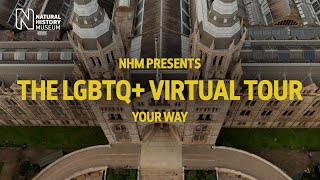
Take a virtual tour of the Natural History Museum and explore the astonishing diversity of the natural world.
Discover the contribution of Black people to the field of natural history.
It takes time, endless patience and skill to transform a fossil into a museum-worthy exhibit.
News
A new statue is joining the world’s oldest display of extinct wildlife in south London.
Our South Asian scientists share their research and their favourite specimen.
The Museum is as a finalist for the world's largest museum prize.
We're the UK's most popular indoor attraction for the second year running.
The works are part of the wider Urban Nature Project.
Science news
Over a century ago, one of the most important scientific expeditions in history departed from the UK to explore the oceans of the world.
Dinosaurs
How we depict extinct animals has changed significantly over time, as artists keep up with the latest scientific discoveries.
Anthropocene
British photographer Mandy Barker assembles collections of plastic pulled from water around the world.
Gilbert White's talent and passion for observing and recording nature inspired many future naturalists, including Charles Darwin.
British wildlife
Ecologist Sylvia Myers introduces some of our favourite finds and how we monitor the plants and animals present.
Female specimens are under represented in collections.
How these institutions now engage with their history is crucial in how they move forward.
Although spinosaurs were named in 1915, little was known about these giants until a 31-centimetre-long claw was discovered in the UK in 1983.
This long-necked skeleton is Attenborosaurus, an extinct marine reptile named after legendary broadcaster Sir David Attenborough.
When Patrick started caring for the Museum's fish specimens, he became one of the institution's first black curators.
Though visitors can spot his namesake on the iconic gilded ceiling of our Hintze Hall, few will have heard of Graman Kwasimukambe.
Explore research into how our history and collections are connected to the transatlantic trade of enslaved people.
Meet the Swedish botanist who ventured around the world on Captain Cook's pivotal first voyage.
Did you know the word ‘dinosaur’ wasn’t coined until 1842?
The adventures of a tenacious female explorer brought to life by comic artist Sammy Borras.
Archivist Laura Brown offers a peek behind-the-scenes at the Museum from 1912 to 1914, when suffragists were fighting for the vote.
Meet the first person to illustrate a book with photographic images.
Mary was a pioneering palaeontologist and fossil collector. Her lifetime was a constellation of firsts.
Whether liaising with cannibals or escaping giant spider webs, Evelyn Cheesman took the challenges of perilous fieldwork in her stride.
Brachiopod curator Zoë Hughes celebrates the life and work of one of the Museum's great pioneering geologists.
Meet the trailblazer who was one of the first women employed as a scientist by the Natural History Museum.
Brimming with enthusiasm for the natural world, even Charles Darwin didn't always get it right.
Charles Robert Darwin transformed the way we understand the natural world with ideas that, in his day, were nothing short of revolutionary.
The story of Dippy the Diplodocus stretches back more than 100 years. Take a look at some memorable moments in pictures.
Ferdinand Bauer is regarded as one of the world's greatest natural history painters, and now his work is uniquely brought together for the first time.
TV presenter, author and academic Alice Roberts shares memories of the Museum and how it influenced her fascination with human evolution.
Discover how Iguanodon’s true identity was finally revealed.
These popular dinosaur reconstructions from the 1960s are no longer scientifically accurate. Can you spot the errors?
For more than 300 years, Britain's wildlife has captivated scientists and artists alike.
Resin deer lungs, a warthog and a pterosaur fossil are just a few of the curious specimens to be found in Hintze Hall.
Investigate how Hintze Hall reflects Richard Owen’s original vision for the Museum.
Discover how whales were at the heart of the original proposal for a museum of natural history in Britain.
Lorraine Cornish, Head of Conservation, prepares to dismantle the Diplodocus skeleton.
The Museum's Library and Archives has digitised its oldest book, Historia Naturalis, to mark the tenth anniversary of the Biodiversity Heritage Library.
Find out how scientists and a palaeoartist created a life-size model of Psittacosaurus featuring real colour patterns, and what this revealed about the dinosaur's life.
Colour is a challenge to preserve in museum collections. What can curators do when it fades?
Tiny, delicate and beautiful, the Blaschka models capture the ethereal mystery of the deep sea.
The Museum's giant squid specimen so inspired one visiting artist that she felt compelled to draw it. Life size.
Library curator Andrea Hart talks about this collection of the Museum's most highly prized natural history literature.
It’s a detail that most of our visitors miss, but the Hintze Hall ceiling is a work of art in itself.
Discover the explorers responsible for the oldest butterfly collection in existence.
Space
Learn how space exploration sheds light on the delicate beauty of life on Earth.
Artist Michael Benson explores the 'alchemy' used to transform space agency data into colour images of our solar system.
Artist Michael Benson explores one of his favourite images: the moon Europa photographed above Jupiter's Great Red Spot.
Human evolution
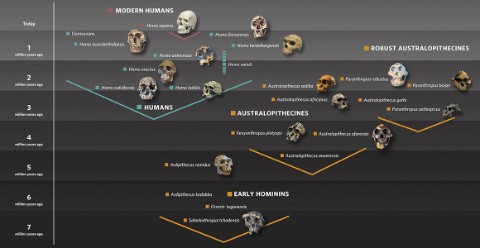
Take a tour through seven million years of human evolution and explore the origin of Homo sapiens.
Find out how palaeoartist Robert Nicholls brought the Museum’s Stegosaurus specimen back to life.
This is the first mastodon fossil from Britain ever described. It belonged to William Smith, creator of Britain’s first geological map.
Get a behind-the-scenes look at the scientific examination of one of the world’s most complete Stegosaurus specimens.
Exquisite watercolours from the Museum collections showcase the pioneering work of the talented Bauer brothers.
Join a group of scientists and artists as they reflect on colour and vision in nature and beyond, how our individual experiences differ, and the impact of technology.
We use cookies to give you the best online experience. We use them to improve our website and content, and to tailor our digital advertising on third-party platforms. You can change your preferences at any time.