Discover a haven for wildlife and people in the heart of London.
Journey beneath the waves and meet some of the fiercest marine reptiles that have ever lived.
Our research themes focus our work so we can find solutions to some of the biggest global challenges.
Science news
A meteorite from the birth of the solar system could tell us more about how life flourished on Earth.
New minerals from the UK are very rare.
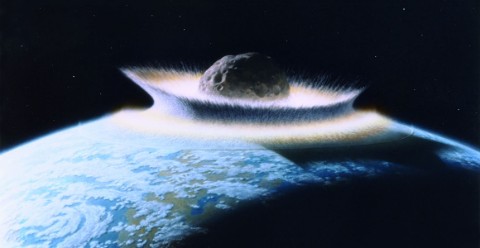
Many groups of dinosaurs were doing rather well right up until the end.
News
The most remote inhabited island in the world has become one of the biggest wildlife sanctuaries on the planet.
The Popa langur lives on an extinct volcano in Myanmar.
The decline in native birds is threatening the existence of island biodiversity.
The world's biggest animals are nature's engineers.
The extinction risk to plants could be worse than previously thought, according to a landmark report.
Centuries of farming, building and industry have made the UK one of the most nature-depleted countries in Europe.
A gas has been found in the clouds of Venus that could have been created by microbes.
Animal populations have declined by 68% since 1970.
Bronze Age people were keeping human body parts and preserving them.
Prehistoric societies in the Britain were creating artistic designs on rock as long ago as the late Ice Age.
The skull shape of birds is just a tiny fraction of the diversity that would have been seen in their dinosaur ancestors.
The first official red list for British mammals has been produced.
The first taxonomically verified checklist of the plants of New Guinea is complete.
New research on Turkana Boy is changing our understanding of the species Homo erectus.
The painting dates to at least 1,000 years ago.
Human waste was found 2,000 metres below the ocean surface.
Tracking the diversity of turtles could also give us clues as to how they might respond to increasing pressures in the future.
A satellite has revealed ancient Martian rivers in more detail than ever before.
Climate change is having a bigger impact on animals and plants in the ocean than those on land.
Discover how we're helping some of the most threatened animals on Earth.
Extraordinary notebooks from the Terra Nova Antarctic expedition are available for study for the first time.
Sequencing the wheat genome could help to protect food supplies in the future.
New species of the deep ocean floor are helping change how we think.
New scans reveal how dinosaur teeth developed.
Ancient fossils are revealing even more about this species' evolution.
Africa and Eurasia were inhabited by a whole range of hominin species just a few hundred thousand years ago.
This may alter the recreation of some non-avian dinosaurs.
Straight-tusked elephants were among the largest land mammals ever to have existed.
Samples collected on the HMS Challenger are teaching us about climate change.
Singapore is losing its butterflies as forests decline and building programmes boom.
Earth's natural systems are struggling to support us.
We use cookies to give you the best online experience. We use them to improve our website and content, and to tailor our digital advertising on third-party platforms. You can change your preferences at any time.