Discover a haven for wildlife and people in the heart of London.
Journey beneath the waves and meet some of the fiercest marine reptiles that have ever lived.
Our research themes focus our work so we can find solutions to some of the biggest global challenges.
Collections
Discover some of the sensational specimens Mary Anning discovered that are now part of the collections we look after.
Oceans
Find out what fossils have revealed about ichthyosaurs, which included the biggest marine reptile that ever lived.
Find out what plesiosaur fossils have revealed about these animals and how big they could grow.
Science news
In the last 12 months, we celebrated the start of our new science centre and appointed our first Director of Collections.
Find out how scientists come up with a species name and what a type specimen is used for.
News
The documents will join other important archives such as the illuminated manuscripts of Charlemagne’s court.
A rather uninspiring specimen in the Natural History Museum’s collection has an extraordinary tale to tell.
Royal Mail is releasing a trove of new palaeontological-themed stamps.
The private collections of Sir Hans Sloane formed the basis of the British Museum, the Natural History Museum and the British Library.
Discover the contribution of Black people to the field of natural history.
Dinosaurs
If you know what you’re looking at, little bits of bone can add up to something big.
Our South Asian scientists share their research and their favourite specimen.
Tring
Walter Rothschild acquired animals from all over the world to study and display at his museum.
Discover more about the people behind the headlines and how they have been overlooked by the history books.
John Edmonstone was a former enslaved man who taught the young Charles Darwin the skill of taxidermy.
Canisius Kayombo is a remarkable researcher who is enriching our understanding of plants and science.
Gilbert White's talent and passion for observing and recording nature inspired many future naturalists, including Charles Darwin.
For over 100 years palaeontologists thought this dinosaur didn’t exist.
How these institutions now engage with their history is crucial in how they move forward.
Get to know the Museum scientists working on the latest dinosaur discoveries.
What on Earth?
Natural selection is one of the core processes of evolution – but how does it work and will it ever end?
Nopcsa was ahead of his time, publishing many creative scientific theories on dinosaurs and other reptiles. He was also a spy and a would-be king.
The first specimen of Mylodon darwinii, a ground sloth found by Charles Darwin in 1832, is now available online.
Take a closer look at nine highlights, including Darwin’s favourite octopus and a rare first edition of his book, On the Origin of Species.
Though visitors can spot his namesake on the iconic gilded ceiling of our Hintze Hall, few will have heard of Graman Kwasimukambe.
Explore research into how our history and collections are connected to the transatlantic trade of enslaved people.
Meet the Swedish botanist who ventured around the world on Captain Cook's pivotal first voyage.
The adventures of a tenacious female explorer brought to life by comic artist Sammy Borras.
Meet the first person to illustrate a book with photographic images.
Mary was a pioneering palaeontologist and fossil collector. Her lifetime was a constellation of firsts.
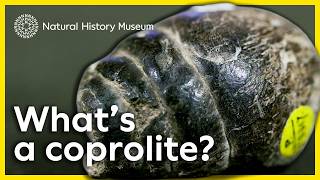
Fossil poo may not be a glamorous fossil find, but it can reveal a lot about prehistoric animals.
Whether liaising with cannibals or escaping giant spider webs, Evelyn Cheesman took the challenges of perilous fieldwork in her stride.
Meet the trailblazer who was one of the first women employed as a scientist by the Natural History Museum.
Brimming with enthusiasm for the natural world, even Charles Darwin didn't always get it right.
Charles Robert Darwin transformed the way we understand the natural world with ideas that, in his day, were nothing short of revolutionary.
From zebra-drawn carriages to fancy-dressed fleas, take a peek inside the curious world of Walter Rothschild.
An intrepid explorer and brilliant naturalist, Alfred Russel Wallace co-published the theory of evolution by natural selection with Charles Darwin.
What can antique corals reveal about the impact of climate change on the ocean?
A special collection of butterfly specimens at the Museum helps tell a tale of extraordinary adventure and scientific insight.
From touring spectacle to museum star – discover the hidden history behind this ancient mammal skeleton.
Resin deer lungs, a warthog and a pterosaur fossil are just a few of the curious specimens to be found in Hintze Hall.
Investigate how Hintze Hall reflects Richard Owen’s original vision for the Museum.
Discover how whales were at the heart of the original proposal for a museum of natural history in Britain.
Darwin’s first scientific theory wasn’t about evolution, but how coral reefs form around the world.
Discover the explorers responsible for the oldest butterfly collection in existence.
This is the first mastodon fossil from Britain ever described. It belonged to William Smith, creator of Britain’s first geological map.
Find out why the first known specimen of Queen Alexandra's birdwing has bullet holes in its wings.
We use cookies to give you the best online experience. We use them to improve our website and content, and to tailor our digital advertising on third-party platforms. You can change your preferences at any time.